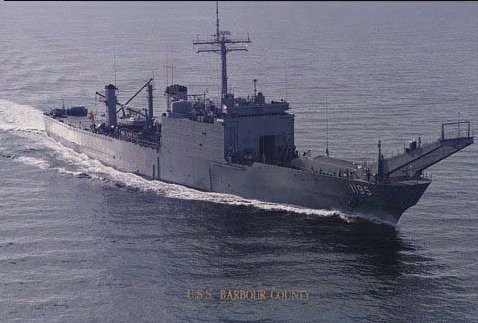
These are the ships I have been stationed on during my Naval career. Some old ones, some new ones. Most of them are amphibious ships – ships designed to carry Marines and cargo to a hostile beach for invasion. I’ve enjoyed some interesting and exciting moments on these ships. I’ve also experienced the dull, all-encompassing boredom all soldiers, sailors and Marines get while performing the many mundane tasks that come with serving their country.
BARBOUR COUNTY was my first assignment as a Midshipman. I worked for the DCA, and managed to learn a lot about the ship in the process. We were in the midst of REFTRA, or Refresher Training, which was a periodic training and inspection cycle all ships went through to re-establish baseline competency in damage control and engineering casualty control. Near then end of my visit to this ship, we backed over our messenger line while conducting a towing exercise and wrapped the line around our port shaft.
On this class of ship, the shaft does not stop turning when a “Stop” bell is ordered. The speed and direction of the ship is controlled by changing the pitch of the propeller. So at low speeds, the shaft turns continuously at 55 RPM, and once blade pitch is at maximum, additional speed increases are achieved by speeding up the engines. Anyway, we wrapped the line up in the shaft, and it pulled into the strut bearing and locked the shaft! We tried pulling it out with the stern anchor winch, and we had some divers come and try to cut it out, but to no avail. I left the ship the next week as they were offloading ammunition and fuel for drydocking to get the shaft fixed.
Ship Information:
Laid down 7 November 1970 at National Steel and Shipbuilding Corp, San Diego, CA; Launched 15 May 1971; Commissioned USS BARBOUR COUNTY (LST-1195), 12 February 1972; Decommissioned 30 March 1992; Loaned to Spain (date unknown); Returned to US custory 30 March 1992; Laid up in the Pacific Reserve Fleet, 30 March 1992; maintenance catagory C at the Naval Inactive Ship Maintenance Facility (NISMF) Pearl Harbor, HI. BARBOUR COUNTY was the seventeenth ship of the twenty ship Newport tank landing ship class, which replaced the traditional bow door design LST. Two derrick arms support a thirty-ton, 112-foot bow ramp for the unloading of tanks and other vehicles ashore, additionally, amphibious vehicles can be launched from the tank deck via the ship’s stern gate and the ship’s flight deck can accommodate most Navy helicopter types.
Specifications:Displacement 5,190 l/t.(lt) , 8,550 l/t.(fl).; Length 522′ 3″ (ovl); Beam 69′ 9 1/2″ (max); Draft, max forward (fl) 13′ 6″, max aft (fl) 16′ 3″ 15′; Speed 20kts; Complement 14 Officers, 15 CPO, 226 Enlisted; Troop Capacity 18 Officers, 21 SNCO 268 Enlisted; Boats, two 36′ :LCPL; Aircraft, flight deck one spot; As built, Armament two twin 3″/50 gun mounts, Upgraded, Aramament; two .25mm chain guns, six .50 cal machine guns, one 20mm Phalanx (CIWS); Propulsion, six 16 cylinder ALCO propulsion diesel engines, two shafts, three engines per shaft; two controllable reversable pitch propellers, shaft horsepower 16,000; twin rudders, one fixed pitch bow thruster, 800hp.
Disposition: Decommissioned 30 Mar 1992 and sunk as target ship 6 April 4.
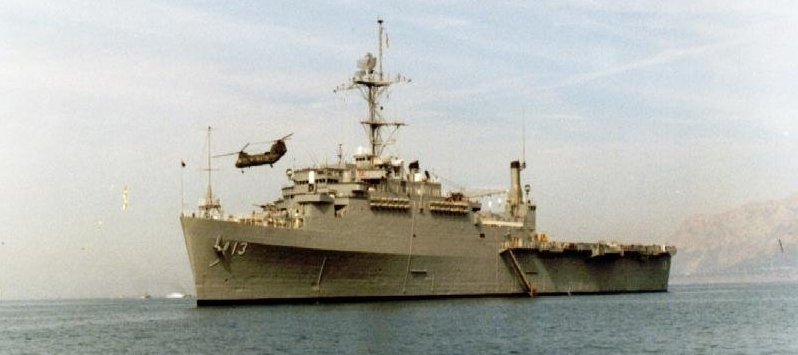
NASHVILLE was my first ship. I flew out to meet this ship just as she entered the Mediterranean on deployment. I arrived fresh out of the Division Officer Course in Newport, RI. The morning after I arrived onboard, the entire Amphibious Ready Group (ARG) sailed right through the KIEV battle group. It was exciting seeing the Russian ships up close like that. I wish I had my camera ready to go, but I didn’t. We were probably no more than 1000 yards from her as she passed down our port side. We waved at them, and they waved back. Soon they were well astern of us and over the horizon, as we were on our way to Lebanon to patrol off the coast near Beirut in case we had to evacuate American civilians. We spent about a month there.
Since I had most recently completed the steam Engineering Officer of the Watch course, I was ready to take over as one of the engineering division officers. I was disappointed right away when I was assigned to First Division. However, that disappointment soon dissipated as I came to enjoy a lot of the things I was doing on deployment. We did many amphibious landings in Sardinia, Italy, Tunisia, Spain, France and Portugal. I very much enjoyed port visits to Naples, Barcelona, Toulon, Nice, Villefranche and Lisbon.
On returning from the cruise, I was rotated to the Engineering Department as Electrical Officer. I qualified as EOOW in about 6 weeks, and stood a few weeks of watch before we started a drydocking maintenance availability in Metro Machine Shipyard in Norfolk. After about two months in the yard, I was assigned some temporary duty on USS SAN DIEGO (AFS 6) to grade some engineering exercises. We went down to St. Thomas for liberty, and then to Guantanamo Bay, Cuba for two weeks of training. I was not on the watchbill, but still ended up being plenty busy with drills going on for about 6 hours a day. By the time I got back to Norfolk, I felt like part of the crew. It was a great break from shipyard drudgery, and it was a great vacation from winter, as it was nice and warm in St. Thomas and Cuba.
After leaving the shipyard in the spring, we did some training, and went down to the Caribbean ourselves for Blue/Green workups with the Marines. Then, in August, we deployed again to the Mediterranean. I had fun returning to Naples and Toulon, and getting to visit Haifa, Israel and Tangier, Morocco. Also went to Benidorm, Spain and Palma, Mallorca. We returned to Norfolk in early February, and began preparations for OPPE (Operational Propulsion Plant Examination). We passed OPPE in April – a clean sweep.
I was starting to get pretty salty by this time. I was a LT(jg), and had been standing EOOW watches for over a year. I was ready to get warfare qualified, so I was sent to the bridge for instruction as OOD, and finally qualified OOD in June of 1989. Then we went into the shipyard again, and my quals slowed down while managing lots of work. I made LT that summer, and qualified as Surface Warfare Officer in October. A month later, I checked off the ship. As much as I had looked forward to that day in the preceding 3 years, I was a bit saddened to leave. I still look back fondly on my many adventures on NASHVILLE.
Ship Information:
Laid down, 14 March 1966 at Lockheed Shipbuilding and Construction, Seattle WA.; Launched, 7 October 1967; Commissioned USS Nashville (LPD-13), 14 February 1970.
Specifications: Displacement 9,734 t.(lt), 17,326 t.(fl); Length 570′; Beam 100′; Draft 23 ft.; Speed 21 kts.; Complement; 24 Officers, 400 Enlisted, 840 Troops, Flag Staff 90; Boats, Assault Craft, (well deck capacity) 1 LCU or 1 LCAC, or 2 LCM-8 or 4 LCM-6, (ships boats) 2 LCPL, 1 motor whaleboat; Armament two 25 mm MK38 chain guns, 2 Phalanx CIWS, eight 50 cal. mgs.. Aircraft, two CH-46/CH-53 or four UH-1/AH-1, or two AV-8B Harriers; Power Plant, 2 Foster-Wheeler boilers, 2 DeLaval steam turbines, 2 Shafts, 24,000 Shaft Horsepower.
Disposition: Decommissioned 30 Sep 2009. Scrapped Brownsville, TX 2022.
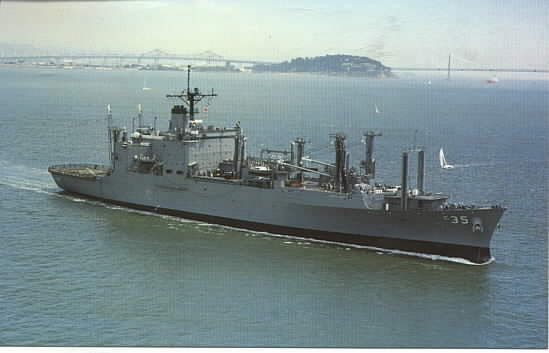
KISKA was my first ship as as department head – Chief Engineer. I completed Department Head School in October, 1992 and after a short trip to London on leave, I packed up my belongings in a Ryder truck with my car towing behind, and drove cross country to meet my ship in Concord, CA. I arrived onboard in mid-November and met the ship in Mare Island. We did not get underway until the first week of January, and only for some underway replenishment practice with USS PYRO. Early that summer, we successfully completed OPPE, and then entered the shipyard for some drydock work and other maintenance. We came out of the shipyard in the fall, and had a slow winter workup season with a few visits to San Diego for schools, and then hit the training cycle again in the spring. We got to go up to Bellingham, WA and Victoria, British Columbia for some liberty, which was very nice. Victoria is one of my favorite ports on the Pacific coast. Before the ship deployed, I got orders to report to BOXER for pre-commissioning duty as Damage Control Assistant. I left KISKA in July, and went to DCA school.
Ship Information:
Laid down, 8 April 1971 at Ingalls Shipbuilding Division, Litton Systems Inc., Pascagoula, MS; Launched, 11 March 1972; Commissioned, USS Kiska (AE-35), 16 December 1972; Decommissioned, 1 August 1996 and Placed In-Service with MSC as USNS Kiska (T-AE-35)
Specifications: Displacement 11,915 t.(lt) 20,169 t.(fl); Length 564′; Beam 81′; Draft 29′; Speed 20kts; Complement (MSC) 125 civilians, 55 navy; Cargo capacity, 60,000 cu ft/6,000t. ammunition; Armament four twin 3″/50 gun mounts; Aircraft, two UH-46 Sea Knight helicopters; Propulsion, three Foster-Wheeler 600psi boilers, one steam turbine, single six bladed fixed propeller, 22,000hp.
Disposition: Decommissioned 1 Aug 1996 and transferred to Military Sealift Command for service. Deactivated 15 Jan 2011. Scrapped Brownsville, TX November 2013.
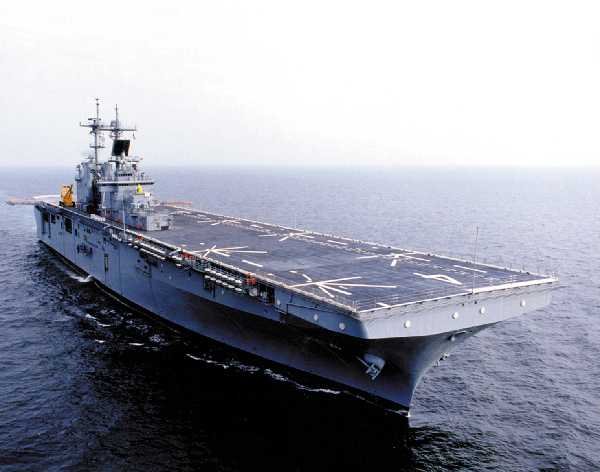
I was privileged to be a Plankowner in BOXER. We commissioned her on 11 February, 1995. I arrived in the builder’s yard in Pascagoula, MS, in October, 1994 and began getting my organization trained. We moved onboard the ship the week of Thanksgiving, and began training the new crew right away. When a ship is built, only a small fraction of the crew actually works onboard at the builder’s yard. Most of the crew is in training at the ship’s new home port, and flies to meet the ship the week the crew moves onboard. So there are many new faces the day you move onboard. We trained hard, and after the start of the new year, we were doing main propulsion space fire drills twice a day, 6 days a week! We did that for about three weeks, and then finally the day arrived to demonstrate it during our Light Off Examination in late January. We passed with flying colors.
We then lit off the plants and tested everything, and prepared for our commissioning ceremony. We were commissioned in February, and they sailed out of Pascagoula for San Diego. On the way, we went through the Panama Canal, and dipped down south enough to cross the equator, allowing me to become a Trusty Old Shellback. Then we stopped in Mazatlan, Mexico for some liberty before arriving in San Diego in early March.
The rest of my tour onboard involved getting the ship fitted out for fleet use and deployment. We had a series of industrial availabilities, including one 2 month shipyard period in Long Beach Naval Shipyard. We were the last ship to go in, although we were not the last out. After that availability, we began our training cycle for deployment, and got certified for full operations. Then, again, I left a ship just months before deployment. I detached in June of 1996.
Ship Information:
Laid down 8 April 1991 at Litton-Ingalls Shipbuilding Corp. Pascagoula MS; Launched 7 August 1993; Commissioned USS BOXER (LHD-4), 11 February 1995.
Specifications: Displacement 40,500 tons (fl.); Length 884′; Beam 106′; Draft 27′; Speed 20kts +; Complement: Crew: 104 Officer, 1004 Enlisted; Marine Force 2074; Armament: 2 Sea Sparrow launchers, 3 20 mm Phalanx (CIWS)mounts, 8 50cal. mgs.; Aircraft: 42 CH-46 Sea Knight Helicopters, 5 AV-8B Harrier aircraft, 6 ASW helicopters; Landing Craft 3 air-Cushion Landing Craft (LCAC); Power Plant: two 600 psi boilers, two geared steam turbines, two shafts, 70,000 total shaft horsepower.
Disposition: Still in active service
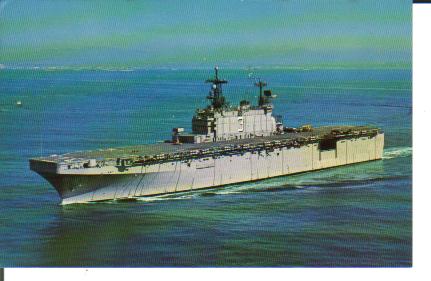
My first forward deployed ship. I arrived in Ocotber, just as the ship arrived off the coast of Dili, East Timor. Since I flew in to Japan, I had to be flown down to meet the ship. I left Sasebo, and flew out of Fukuoka to Osaka, Osaka to Hong Kong, and from there to Sydney, Australia. I had a long lay-over in Sydney. I arrived there at about 0800, and did not have to be back at the airport until about 1700, so I spent the day touring the city. I was beautiful, and I decided to go back some day. (I did a year later for Christmas with my wife.) I keft Sydney that evening for Darwin, and spent the night in a military base there. I was bunked on a cot in a gymnasium with a bunch of Marines. The lights and fans in the gym were connected to a motion sensor, so every time somebody got up to answer the call of nature, the lights and fans came on for 45 minutes. Quite a nuisance! The next morning, a bunch of us were loaded into a C-130 and flown to Dili. I ended up in Dili for the whole day, and finally caught a ride to the ship in a CH-46 at about 1700.
On our way back from East Timor, we stopped in Cebu, Philippines for some well earned liberty. Even in early November, the weather was great, and I got to go scuba diving. Great port visit! We returned to Sasebo in mid-November amid much fanfare.
After a relaxing and pretty much uneventful Holiday period, the Chief Engineer suffered a heart attack, and I was asked to fleet up to the job. I did, and the Captain liked the way I was handling it, so he asked me to stay on as Chief Engineer, and he would get another DCA. We then got underway for Singapore, and arrived in late February. Great liberty port also! Then we commenced Blue/Green workups, and completed them in April, and returned to Sasebo for a 9 week maintenance overhaul. We completed that in late June, and began our preparations for swapping the ship with USS ESSEX. This was done to get a newer ship to Sasebo for sustained operations without moving two crews and their families. The idea was, have the crews swap ships. It worked, but it was very hard to let our old ship go with a completely new crew onboard. We swapped BELLEAU WOOD for ESSEX in July of 2000.
Ship Information:
Laid down 5 march 1973 at Ingalls Shipbuilding Corp. Pascagoula MS; Launched 11 April 1977; Commissioned USS BELLEAU WOOD (LHA-3), 23 September 1978.
Specifications: Displacement 38,900 tons (fl.); Length 820′; Beam 106′; Draft 26′; Speed 24kts; Complement: Crew: 82 Officer, 882 Enlisted; Troop Capacity 1900 plus; Armament: 2 RAM launchers, 2 5″/54, 2 20 mm Phalanx (CIWS), 6 25 mm mgs; Aircraft: 28 amphibious transport helicopters; Power Plant, two 600 psi boilers, two geared steam turbines, two shafts, 70,000 total shaft horsepower.
Disposition: Decommissioned 25 Oct 2005. Sunk as target 13 Jul 2006.
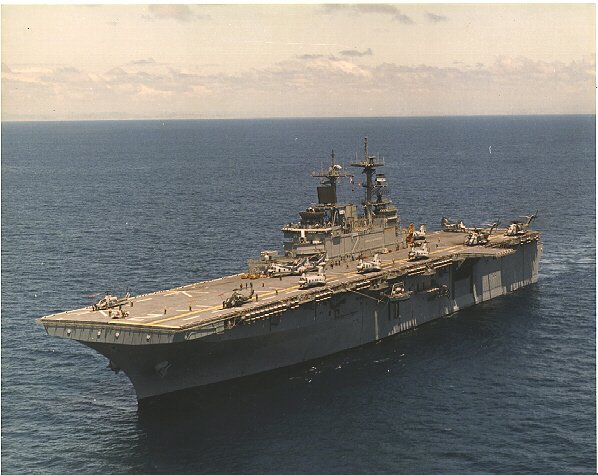
ESSEX is BOXER’s older sister. We took over ESSEX in July – a difficult task. Essentially, the crews would swap ships and then the ESSEX’s crew would sail back to San Diego on BELLEAU WOOD and we would retain the newer ESSEX in Japan. ESSEX steamed over from San Diego, delaying arrival slightly to avoid a typhoon. She tied up in the basin in Sasebo with us and we began the turnover process. We went over everything and after a couple of weeks completed the swap. It was difficult for all of us to watch BELLEAU WOOD sail out of Sasebo, never to return.
Once we were on our own, we received a “safe to steam” certification from the Amphibious Group 1 and promptly got underway and went to anchorage to load our ammunition. Then we went down to Okinawa and picked up Marines from 31st MEU and did a shakedown with the new ship, making sure we could execute our mission. After completing that, we returned to Sasebo for a few weeks before Blue/Green workups in September. Before we could go to Okinawa to pick up the MEU, we had to steam into the Sea of Japan for a couple of days to avoid a typhoon.
We completed workups the beginning of October and after a couple weeks, got underway for Operation Foal Eagle, a joint operation with South Korea. We steamed to Pohang, South Korea. It was too windy on arrival to moor, so we anchored out for a day before mooring pierside. We then spent a week or so underway in support of Operation Foal Eagle before returning to Sasebo. In November we got underway for Hong Kong for some liberty. It was fun seeing all the sights and taking the Star Ferry over to Kowloon. We even saw Jackie Chan filming a movie scene over on Victoria Peak where we went to dinner one night.
We returned to Sasebo for the Holidays and enjoyed some time at home. In January we got underway for Guam for an exercise and spent a little time inport there. In February we went to Yokosuka for a port visit and some training. It was a lot of fun getting to see a bigger US Naval presence. Sasebo is quite small, but Yoko is quite big! In March, we got underway for workups again and went to Iwo Jima for the 56th anniversary of the WWII assault there. We had a few veterans of the battle onboard with us, including Jack Lucas, a Medal of Honor winner. After a few days we departed and headed back top Sasebo.
In April we picked up the MEU again and headed to Australia for Operation Tandem Thrust. Among the operations we had port visits in Townsville and Brisbane, which were absolutely fantastic! In June, we returned to Sasebo and began our maintenance period. The crew moved off the ship to a berthing barge and industrial repairs began. By August, my tour was at and end and my relief was onboard. I departed the ship on 7 August and left Japan 2 days later.
Ship Information:
Laid down, 20 March 1989 at Litton-Ingalls Shipbuilding Corp. Pascagoula MS; Launched, 23 February 1991; Commissioned USS ESSEX (LHD-2), 17 October 1992.
Specifications: Displacement 40,500 tons (fl.); Length 884′; Beam 106′; Speed 20kts +; Complement: Crew: 104 Officer, 1004 Enlisted; Marine Force 1894; Armament: 2 Sea Sparrow launchers, three 20 mm Phalanx (CIWS)mounts, eight 50cal. mgs.; Aircraft: 42 CH-46 Sea Knight Helicopters, 5 AV-8B Harrier aircraft, 6 ASW helicopters; Landing Craft 3 Air-Cushioned Landing Craft (LCAC); Power Plant: two 600 psi boilers, two geared steam turbines, two shafts, 70,000 total shaft horsepower.
Disposition: Still in active service